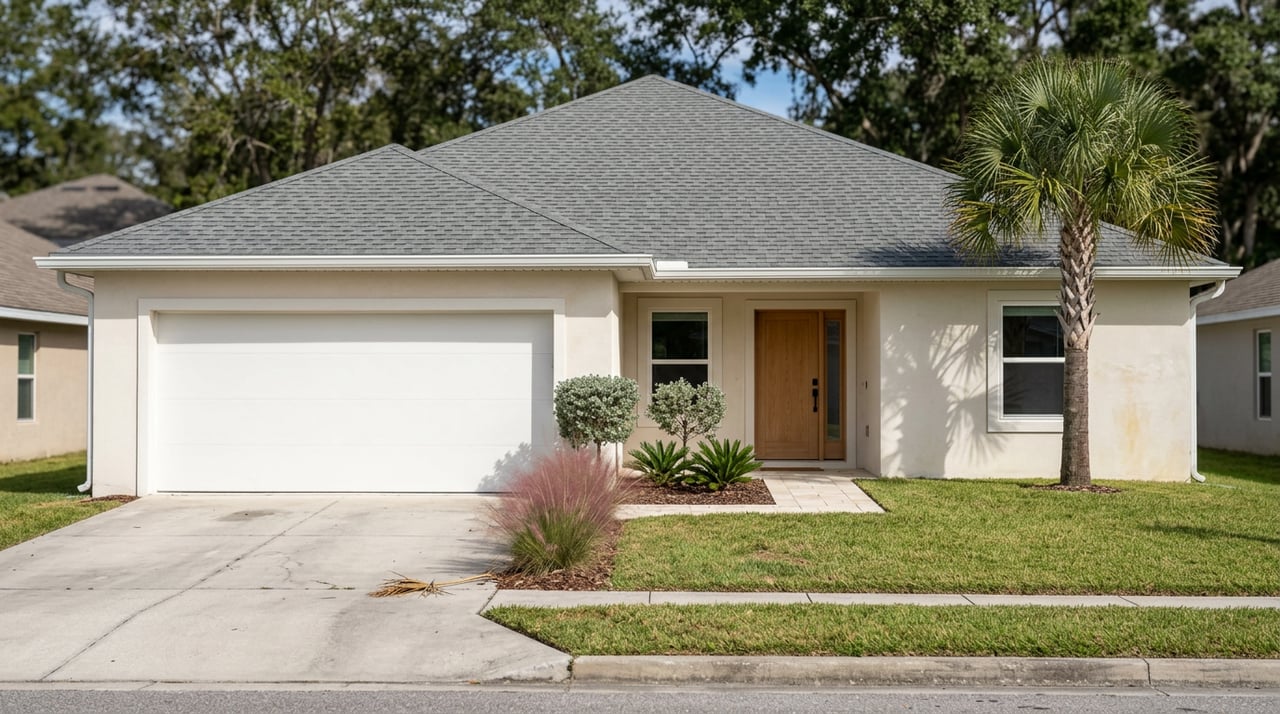
If you are looking at land and small acreage around Parrish, the biggest question usually is not just how many acres. It is whether the parcel works for what you want to do now, what it may support later, and what it will take to get there. In a market where rural tracts, village-core parcels, and planned growth areas can sit surprisingly close together, smart due diligence matters. This guide will help you understand what to check before you buy and where the biggest opportunities and risks may show up. Let’s dive in.
Why Parrish land stands out
Parrish is an unincorporated Manatee County market with a mix of parcel types. According to Manatee County’s Parrish Area Improvement District overview, the district surrounds the Village of Parrish and stretches roughly from north of Moccasin Wallow Road to north of Golf Course Road, and from west of Fort Hamer Road to east of Spencer Parrish Road.
That matters because the county says tax increment financing in the district can support infrastructure like streets, utilities, sidewalks, lighting, parks, and playgrounds. For you as a buyer, that means some land may benefit from long-term area improvements, even though readiness can still vary from parcel to parcel.
Parcel types around Parrish
Parrish is not a one-size-fits-all land market. The Parrish Commercial Village map shows a core area around US 301, CR 675, and CR 62 with designations including VIL, PD-MU, PD-R, NC-M, and PD-C, while nearby land still includes A and A-1 zoning.
In practical terms, you may be looking at one of three broad categories:
- Village-core parcels with more immediate development context
- Transition parcels that may sit between rural and more active growth areas
- True rural acreage where utilities, access, and entitlement questions can be more significant
This is why buying land in Parrish often comes down to usability, not just size. A five-acre parcel can be more build-ready than a larger tract, depending on zoning, overlays, utilities, and access.
Start with zoning and future land use
One of the most common mistakes land buyers make is assuming zoning tells the whole story. In Manatee County, a parcel needs to work at both the zoning level and the future land use level.
The county’s zoning code acronyms guide lists districts including A for General Agriculture, A-1 for Suburban Agriculture, and VIL for Villages such as Parrish. It also identifies future land use categories like AG/R, ER, UF-3, RES-1, RES-3, RES-6, and RES-9.
If you are evaluating land for a home site, future split, investment hold, or a longer-term development play, verify both layers before you make assumptions. A parcel may look promising on a listing, but the allowed use depends on how those county rules line up.
Rezoning activity matters
Recent county notices show just how different land outcomes can be in the same area. In December 2024, a 5-acre parcel at 5403 Red Rooster Road changed from A to A-1.
County notices in 2025 also showed larger Parrish tracts moving from A or A-1 to PDR, with projects involving 94, 440, or 1,100 residential units. Some of those notices still retained overlay constraints such as CPA, CEA, or watershed overlays, which is a good reminder that a rezoning does not automatically remove every development limitation.
Ask the key question: Can you build now?
Before you buy, get clear on whether the parcel is usable today or whether its value depends on future approvals. That is often the difference between a straightforward purchase and a more speculative one.
Here are the main questions to ask early:
- Is the current zoning consistent with your intended use?
- Does the future land use support that use too?
- Are there overlays that may limit clearing, grading, density, or site design?
- Will you need a rezoning or additional entitlement steps?
- Is the parcel actually build-ready, or just potentially valuable later?
The county’s planning maps page recommends reviewing zoning, future land use, overlays, and flood maps in the GIS viewer. The same page notes that you can search by property identification number, owner name, or address.
Utilities are never a safe assumption
One of the biggest land-buying mistakes in rural or semi-rural areas is assuming water and sewer are available. In unincorporated Manatee County, that needs to be confirmed property by property.
According to Manatee County Utilities, the county provides potable water, wastewater, reclaimed water, and solid waste services in unincorporated areas. At the same time, the county’s building permit application still distinguishes between county water, well water, sewer, and septic.
For you, the takeaway is simple: do not assume a parcel has public service just because it is in a growing part of Parrish. Confirm whether the site is on public water and sewer or if it will require well and septic.
Access and frontage can change the math
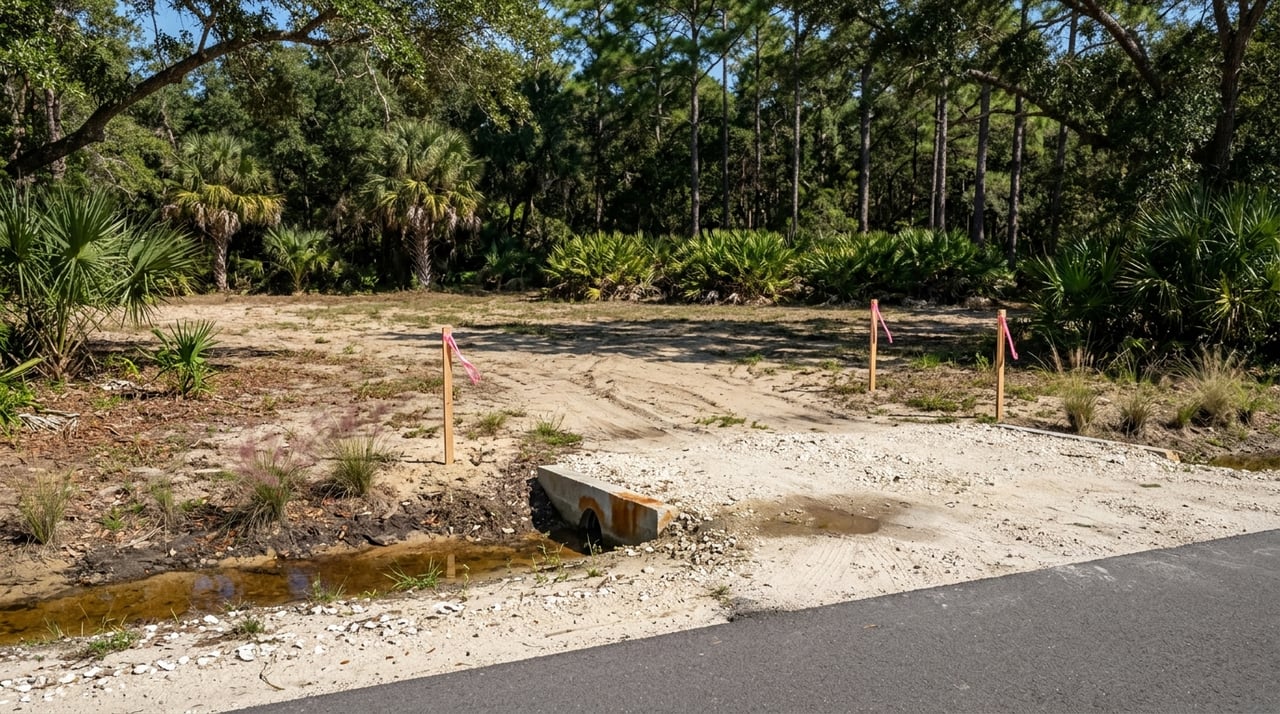
Even if a parcel looks usable on paper, physical access can become a real cost item. Driveways, culverts, frontage work, and right-of-way improvements may all affect your budget and timeline.
Manatee County says driveway and culvert permits for residential access in county public rights-of-way are handled by Public Works. The county also notes that certain improvements in public rights-of-way, including culverts, utilities, landscaping, communication cables, and pipelines, require an approved Right-of-Way Use Permit.
If your plan includes any digging, the county’s Sunshine 811 guidance says homeowners, contractors, and excavators should call 811 or create a ticket before excavation. That is a practical step, but it is also a reminder that site work starts with process, not just equipment.
Flood and environmental review deserve separate checks
Flood risk is one of the most important due diligence items for land in Florida, but it should not be treated as the same thing as evacuation planning. Manatee County’s floodplain guidance says flood zones A and V are high-risk, while X zones are lower-risk but can still flood.
The county also makes clear that flood zones are not the same as evacuation zones. If you are considering acreage around Parrish, review flood, drainage, and evacuation factors separately so you understand the full picture.
Environmental review is another important layer. The county’s Planning, Development and Zoning Division states that environmental review is intended to protect and preserve natural resources while balancing growth. If your plans involve clearing, grading, or drainage work, this can directly affect feasibility, timing, and cost.
Budget for permits and impact fees
Your land budget should include more than the purchase price. Site prep, permitting, utility work, access improvements, and county fees can all materially affect the total cost.
Manatee County notes that new construction in unincorporated areas triggers impact fees. If you are comparing parcels, one site may look cheaper upfront but become more expensive once you factor in access, utility extension, flood-related design, or other entitlement requirements.
A practical due diligence checklist
If you want a cleaner decision process, use a checklist before you commit. Based on county guidance, here are some of the most important items to confirm:
- Boundary survey to verify parcel limits
- Easement and title review to identify restrictions or access issues
- Flood determination for flood-zone and drainage considerations
- Utility availability confirmation for water, sewer, well, or septic needs
- Driveway and access review for frontage, culvert, and permitting requirements
- Land-use review for current zoning, future land use, and overlays
- Development feasibility discussion with county planning staff and your land-use professionals
The county says its planning staff are the primary contact for land development inquiries from pre-application through final site plan approval. In many cases, it also makes sense to bring in a surveyor and land-use professional early, especially if the parcel has any uncertainty around access, overlays, or intended use.
What this means for buyers in Parrish
Parrish can offer genuine opportunity if you buy with a clear plan. Some parcels may work well for a custom home or small-acreage hold, while others may be more appropriate for buyers willing to take on entitlement risk in exchange for longer-term upside.
The key is understanding that not all acreage is equal. In a market shaped by rural zoning, village planning, infrastructure expansion, and active rezoning activity, the best opportunities usually come from patient research and careful review, not quick assumptions.
If you want help evaluating land or small acreage around Parrish, Julian Germinal can help you think through the property from both a real estate and practical due diligence perspective before you make your move.
FAQs
What should you verify before buying land in Parrish?
- You should confirm zoning, future land use, overlays, flood status, utility availability, access, and any permit or entitlement requirements.
Can a Parrish parcel have zoning that still does not allow your plan?
- Yes. In Manatee County, you need to verify both the zoning designation and the future land use category before assuming a use is allowed.
Does land in Parrish always have public water and sewer?
- No. Service availability varies by parcel, and some sites may rely on well water and septic rather than county utilities.
Do small acreage properties in Parrish need driveway or culvert permits?
- They can. Residential access in county public rights-of-way may require driveway or culvert permits through Manatee County Public Works.
Are flood zones and evacuation zones the same in Parrish?
- No. Manatee County states that flood zones and evacuation zones are separate, so both should be reviewed during due diligence.
Should you expect extra costs beyond the land price in Parrish?
- Yes. Depending on the parcel, you may need to budget for surveys, access improvements, utility work, permits, and impact fees tied to new construction.